BMX Space
DRSV, LLC.Sports
4.61.79K Reviews
- Version
- 1.042
- Installs
- 10.00M
- Age Rating
- Everyone
Screenshots
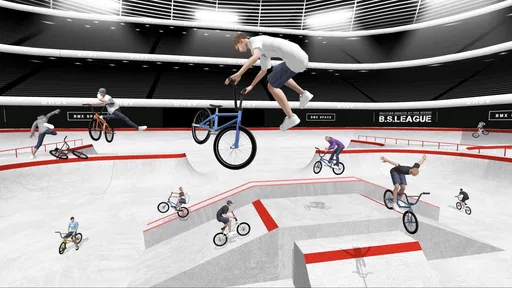
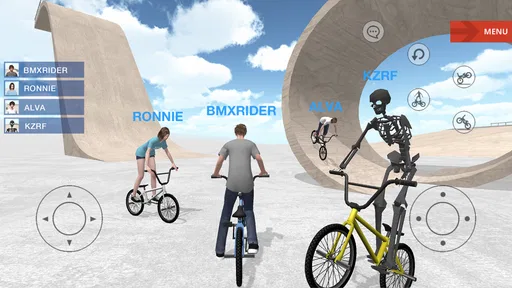
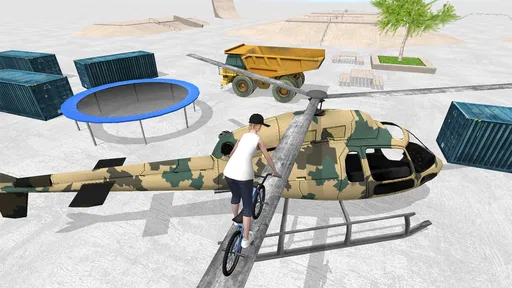
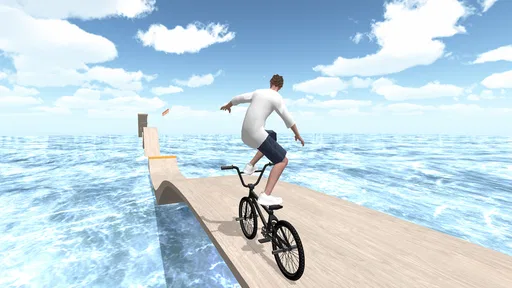
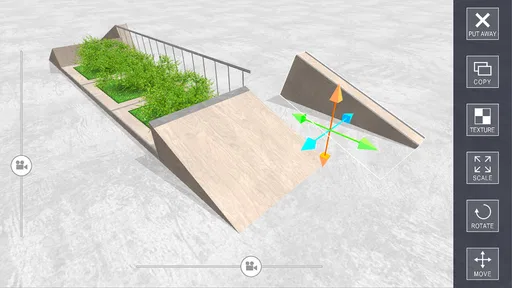
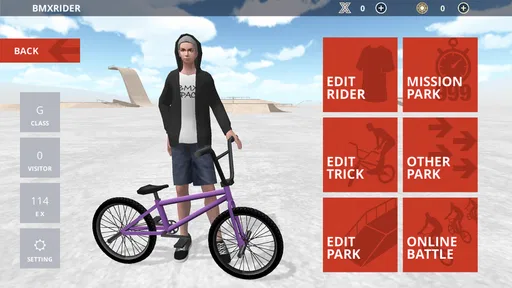
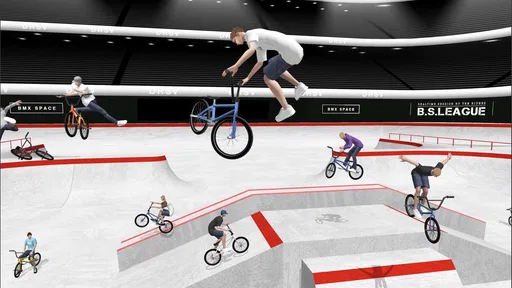
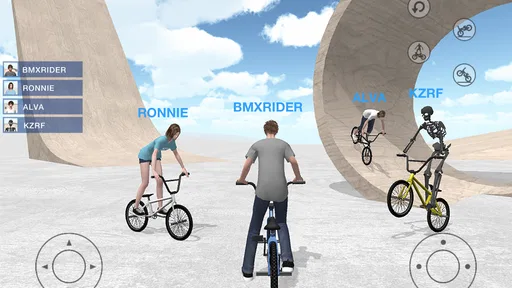
Our Review of BMX Space
 Analysis by Appyee
The first time I loaded BMX Space, I understood its appeal quickly: it wants BMX riding to feel like a shared playground rather than a solitary time trial. It is a free sports game from DRSV, LLC., built around online multiplayer sessions and a collection of custom parks. The idea is simple, but the mood depends heavily on how you use those spaces. I found myself paying as much attention to the shape and personality of each park as I did to landing a clean line.
That makes this a game I would recommend to someone who enjoys experimenting, repeating a trick until it feels right, and watching other riders create their own routes. It is less convincing for players who want a tightly structured career, a serious simulation, or a carefully narrated progression. The experience is informal and social, with the freedom that brings and the lack of direction that comes with it.
The game is listed for Everyone, runs on Android 7.0 or later, and is free to start. Optional in-app purchases range from $0.99 to $19.99 per item, so I would approach it as a no-cost way to try the riding and multiplayer atmosphere before deciding whether any extras are worth buying. Its current version is 1.038, and its audience is already substantial, with over ten million installs, a 4.6 average from around forty-four thousand ratings, and roughly eighteen hundred written reviews.
How the first session feels
BMX Space does not need a long setup to communicate what it is about. The central attraction is the park: a place to ride, test movement, and share space with other players. Instead of presenting BMX as a checklist of conventional sporting events, it treats the bike as a tool for exploring ramps, gaps, platforms, and lines that invite repetition.
That first impression is strongest when I stop expecting a traditional sports-game structure. There is no need to approach every session as a match with a clear winner. A better mindset is to enter with a small goal: find a route through a park, practice a jump, follow another rider’s line, or simply learn how the environment flows. This makes a short session feel worthwhile even when I am not chasing a particular result.
The online focus also changes the emotional temperature. A populated park can feel spontaneous, because another player may be trying a line nearby or moving through the same area from a different direction. That shared presence gives the spaces more life than an empty practice room would have. At the same time, players who prefer complete control over the pace may find multiplayer activity distracting rather than motivating.
One practical tip is to spend the opening minutes observing the park before attempting ambitious tricks. I get more from the game when I learn where a ramp naturally sends the bike, which surfaces allow a smooth continuation, and where a landing leaves enough room to recover. This is more useful than immediately trying to copy the most dramatic movement I see from another rider.
A playground rather than a conventional sports campaign
The usual alternatives in mobile sports games often emphasize short competitions, scoreboards, unlocks, or a sequence of challenges. BMX Space sits in a different lane. Its custom parks make the environment itself the main source of variety, while online sessions provide the social layer. That can feel refreshing if I want an open-ended riding toy, but it can also feel loose if I am looking for a strong sense of advancement from one session to the next.
This distinction matters before downloading. If your ideal BMX game is a focused trick simulator with detailed training goals, you may want something more structured. If you like sandbox-style movement and the idea of sharing a virtual riding spot, this game has a clearer reason to exist. I would describe it as a multiplayer BMX playground first and a traditional sports title second.
The free entry point helps with that decision. You can test whether the handling, park design, and online mood suit you without first committing money. I would still keep the optional purchases in mind, especially if you are reviewing the game for a younger player. The Everyone rating makes it broadly accessible, but the presence of purchases means a device owner should remain aware of how spending is managed.
How the parks communicate mood
The most interesting artistic choice is that the setting is not just a backdrop for tricks. The custom-park concept gives each riding space a chance to establish its own visual language. A park can feel fast or technical depending on how its ramps are arranged, and the same bike movement can seem completely different when the surrounding geometry encourages a long flowing route instead of a compact sequence of jumps.
I pay attention to the negative space between obstacles. Open areas make it easier to build speed and improvise, while tighter arrangements ask for more careful positioning. This creates a quiet form of pacing without forcing the game into a formal level-by-level campaign. The environment tells me whether to move boldly, slow down, or search for a less obvious line.
That is also where the custom nature of the parks becomes a trade-off. Variety can make the game feel fresh, but not every space will suit every riding style. Some players will prefer parks that support continuous flow; others will enjoy awkward angles and experimental layouts. I think the best way to judge a new park is not by asking whether it looks impressive at first glance, but whether its geometry gives you several believable ways to ride through it.
A useful workflow is to make three passes through a new area. On the first pass, I look for the safest route and learn the basic shape. On the second, I try to connect two separate features into one line. On the third, I deliberately take a less obvious path and see whether the park supports improvisation. This turns a quick visit into a small design study and helps reveal whether the space has depth beyond its initial visual impression.
Visual identity and the feeling of place
Because the game is centered on BMX spaces, its atmosphere comes from the relationship between rider and architecture. Ramps, platforms, open floor, and transitions are not merely decorative objects; they define how the session breathes. A park with room to recover after a landing feels forgiving, while one that places obstacles close together creates tension even without a formal difficulty label.
I also like that this approach keeps the mood grounded in movement. The setting supports the fantasy of having a place to ride with other people, rather than interrupting it with unrelated story elements. That focus gives the game a coherent identity, although it means players who need a strong narrative world may find the presentation intentionally spare.
The art direction works best when I let the park guide the session. Instead of treating every surface as something to conquer immediately, I read the space as a sequence of invitations: a ramp suggests height, a broad stretch suggests speed, and a narrow landing suggests precision. This way of playing makes the environment feel more expressive and gives the game a calmer, more observational side.
Sound, rhythm, and the pace of a session
In a BMX game, sound has an important job even when the mechanics remain the main attraction. The rhythm of a session comes from acceleration, takeoff, landing, and the decision to continue or reset after a mistake. I found that the game’s mood is most effective when I focus on this physical cadence rather than rushing from one stunt to the next.
The online setting adds another layer to that rhythm. Seeing other riders nearby creates a sense of activity, but it does not automatically create competition. Sometimes the most enjoyable session is one where several players occupy the same park while following completely different lines. That shared but unforced energy suits the game better than a constant demand to outperform everyone around me.
There is a subtle trade-off here. Players who enjoy quiet practice may prefer a less populated space, while those who want the feeling of a busy riding spot will get more from active multiplayer sessions. The game’s atmosphere therefore depends partly on the people sharing the park at that moment. I would not judge a single session too quickly; a different group of riders can change the tone considerably.
My advice is to use sound and movement as a pacing tool. If I keep chaining attempts without pausing to understand why a landing failed, the session becomes repetitive. When I slow down, watch the approach, and treat each attempt as a small rhythm exercise, the same park offers more to think about. That is one of the less obvious strengths of a game that might initially look like a simple trick playground.
Why the mood works better for short visits
BMX Space fits naturally into short, repeatable sessions. I can enter a park with one narrow objective, spend a few minutes refining it, and leave without feeling that I abandoned a large campaign. This makes it suitable for a quick break, especially when I want something interactive rather than a passive distraction.
Longer sessions can still work, but they require self-direction. I need to create my own progression by moving from basic routes to more demanding combinations or by exploring another custom park. Without that personal structure, the open format may begin to feel aimless. This is not necessarily a flaw, but it is an important difference from sports games that constantly present the next event or reward.
For an everyday example, I could play after work while waiting for a friend to finish an appointment. I would choose a familiar park, spend the first few minutes warming up, then try to connect a jump and landing that I usually treat separately. If another player appeared, I might follow their route briefly to understand how they read the same space. That gives the session a clear purpose without requiring a long uninterrupted block of time.
Where the mechanics and atmosphere meet
The game’s mechanics make the most sense when they serve the environment. A trick is not interesting only because it looks impressive; it matters because the park gives me a reason to attempt it. A well-placed transition can turn a basic movement into the start of a longer line, while an awkward approach can make a simple landing feel like a genuine test of control.
This relationship between movement and layout is the reason I would not evaluate the game solely by counting available actions. The more valuable question is whether the spaces encourage experimentation. In my experience, the custom-park idea gives the mechanics room to breathe, because I can approach the same feature from different directions and change the result through timing and positioning.
There is a learning curve, especially for players who expect immediate consistency. A failed attempt is not always a sign that the game is unfair; sometimes I approached with too much speed, selected a poor angle, or tried to continue when a controlled landing would have been smarter. The game rewards patience more than frantic input, and that may not suit people who want instant, arcade-like success.
One advanced habit that helped me was separating the setup from the trick itself. I first practiced reaching the correct launch point with a stable approach. Only after that felt reliable did I add the movement I wanted to perform. This two-stage process makes failures easier to diagnose and prevents me from blaming the trick when the real problem is the route leading into it.
Multiplayer as a creative tool
The online session format is more than a way to place competitors in the same area. It can also be used as a source of ideas. Watching another rider choose a line I had ignored can reveal how much flexibility a park contains. I do not have to copy the entire route; even one change in approach can make a familiar feature feel new.
That said, multiplayer is not automatically better for every player. If you want uninterrupted practice, other riders may make it harder to maintain concentration. If you enjoy comparing styles and discovering routes socially, their presence adds a layer that a solo-focused game cannot reproduce in the same way. I would choose this title for interaction and shared space, not for a perfectly controlled training environment.
A good compromise is to alternate between observation and personal practice. I might spend one session exploring alone, then return to an online park with a specific question: how do other riders handle a particular gap, and can I adapt that idea to my own timing? This keeps multiplayer from becoming background noise and turns it into a practical learning resource.
Who should try it and who should skip it
I think BMX Space is a strong match for players who like freeform BMX movement, custom environments, and online sessions where the fun comes from experimenting rather than completing a fixed campaign. It is also a sensible choice for someone who wants to sample a sports game without paying upfront. The broad age rating makes it easy to consider for a general audience, while the optional purchases are worth discussing before handing the device to a child.
I would be more cautious about recommending it to someone who wants realistic sports management, a detailed career mode, formal tournaments, or a tightly ordered training program. The same openness that makes the parks inviting can leave a goal-oriented player wondering what to do next. A conventional challenge-based BMX game would probably be a better fit in that situation.
It may also be a poor choice if your enjoyment depends entirely on calm solo play. The multiplayer identity is central to its character, and the atmosphere changes with the activity of the session. I would not download it expecting a purely private practice tool; I would download it expecting a shared riding space where personal goals provide the structure.
My atmosphere verdict after living with the parks
BMX Space succeeds when it treats riding as a mood as much as a mechanic. Its parks create the setting, its online sessions provide the social pulse, and its open format lets players decide whether a visit becomes a quick trick attempt or a longer exploration of lines and timing. The result is more relaxed and expressive than a conventional sports campaign, but also less guided.
What stayed with me was the way the environment shapes the pace. I could make a session energetic by linking features and chasing momentum, or make it thoughtful by studying approaches and refining one landing. That flexibility gives the game a coherent identity, especially for players who enjoy finding their own rhythm instead of following a prescribed route.
The limitations are clear. The experience asks me to supply my own objectives, and the quality of a session depends on whether the current park and group of riders match my mood. Optional purchases mean the free starting point should be treated with sensible spending awareness. Players seeking a deep simulation or a structured progression system should look elsewhere.
For me, though, the combination of custom parks, BMX-focused movement, and multiplayer atmosphere makes this a worthwhile free download for the right audience. I would recommend trying it during a short session, learning one park carefully, and deciding from there whether its open-ended rhythm clicks with you. If the pleasure of a game comes from discovering a better line rather than being told exactly what to do, this is where BMX Space feels most at home.
Privacy and Permissions
See what permissions an app requests and how it handles your data.
- Other
- view network connections, full network access, prevent device from sleeping
Verdict
Strengths of BMX Space
- Responsive controls make tricks easy to learn and chain together.
- Large skatepark areas offer plenty of room for creative lines.
- Character and bike customization adds a personal touch.
- Runs smoothly on many mid-range mobile devices.
- Open-ended gameplay lets you practice without strict objectives.
Limitations of BMX Space
- Some advanced tricks require considerable practice to master.
- The visual style may feel basic compared with newer sports games.
- Progress can become repetitive after exploring the main areas.
- Ads may interrupt gameplay for users on the free version.
- Limited multiplayer interaction reduces the social experience.
Other Releases by DRSV, LLC.
View All
Skate Space
Sports4.5

Scooter Space
Sports4.6
Similar Picks in This Category
View All
8 Ball Pool
Miniclip.com4.8

Pooking - Billiards City
AIM TOP GAME TECHNOLOGY LIMITED - pool4.6

Carrom Pool: Disc Game
Miniclip.com4.4

EA SPORTS FC Soccer Mobile 26
ELECTRONIC ARTS4.6

World Soccer League
mobirix4.3

Soccer Cup 2026: Football Game
INLOGIC SPORTS - football tennis golf soccer4.3
Frequently Asked Questions
What is BMX Space, and what can you do in the game?
BMX Space is a freestyle BMX game focused on performing tricks, exploring riding areas, and creating your own style. You can ride through different environments, practice jumps and combinations, and compete with the game’s physics rather than following a traditional racing campaign. It is designed for players who enjoy experimentation, stunt challenges, and casual sessions where landing a difficult trick can be more satisfying than simply reaching the finish line.
Is BMX Space suitable for beginners?
Yes, BMX Space can be enjoyed by beginners, although the controls and physics may take some time to understand. New players should start by practicing basic movement, jumping, balancing, and landing before attempting advanced combinations. The game rewards patience, because crashes are part of learning. Players familiar with BMX or physics-based sports games may adapt more quickly, while newcomers may need several sessions to feel comfortable.
Does BMX Space include multiplayer or online features?
BMX Space offers features that make riding with other players an important part of the experience, depending on the version and platform available. Online or shared spaces can allow players to meet, show off tricks, and explore together rather than playing only in isolation. Before downloading, check the current store description because multiplayer availability, room options, and required internet access may change through updates.
Can you customize your BMX rider and bicycle?
Customization is one of the appealing aspects of BMX Space. The game allows players to personalize elements of their rider and bike, helping each setup feel different while they practice or perform tricks. Available options can include visual changes and unlockable content, although the exact selection may depend on progression, updates, or the platform version. Players who enjoy creating a unique appearance will find this feature particularly useful.
Does BMX Space require an internet connection, and is it free to download?
BMX Space may be available as a free download, but players should review the current Google Play or App Store listing for pricing, advertisements, in-app purchases, and device requirements. Some parts of the game may work offline, while online areas or multiplayer functions generally require an internet connection. A stable connection is also recommended when downloading updates or accessing features that depend on online services.
Play our best games!


